
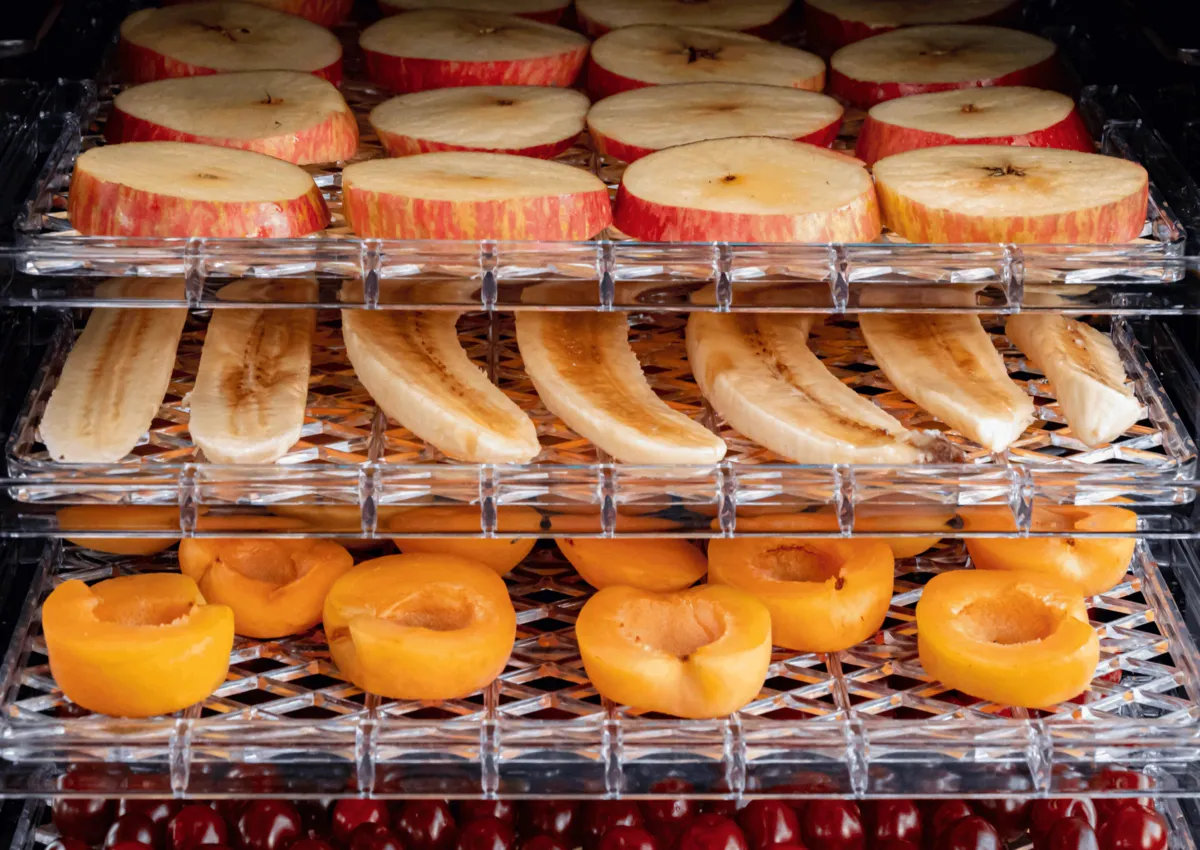

Drying is one of the oldest and most practical methods of preserving food. Removing moisture slows microbial growth, improves storage stability, reduces product weight, and allows fruits, vegetables, coffee, herbs, dairy ingredients, and other foods to be transformed into shelf-stable products.
But moisture is not the only thing affected by heat.
Temperature influences the reactions taking place inside food during drying. Color pigments can degrade, volatile aromas can disappear, vitamins can break down, and sugars and proteins can react to create new flavors and colors.
Successful food drying therefore requires a balance between moisture removal and product quality.
Temperature and Drying Time Work Together
Higher temperature generally increases the rate of moisture evaporation. Faster drying can reduce production time and improve equipment throughput.
However, excessive heat can accelerate quality deterioration.
Lower-temperature drying appears gentler, but it often requires longer drying times. A product exposed to moderate heat for many hours can sometimes experience significant quality changes despite the lower temperature.
Food processors therefore need to consider temperature and exposure time together.
The ideal drying condition removes moisture efficiently while keeping the product within an acceptable temperature range for as little time as practical.
Color Is Often the First Visible Change
Color strongly influences how consumers judge dried food.
A bright strawberry powder, green herb, orange carrot slice, or red chili is usually associated with freshness and quality. Significant darkening or fading can make a technically acceptable product appear overprocessed.
Several mechanisms can change color during drying.
Natural pigments such as chlorophyll, carotenoids, and anthocyanins can be sensitive to heat, oxygen, and processing time. Enzymatic browning may also occur during some stages of processing, while non-enzymatic reactions become increasingly important as temperature rises.
The Maillard reaction is particularly relevant in foods containing reducing sugars and amino compounds. Controlled Maillard reactions can create desirable roasted characteristics, but excessive reactions can darken products and change their original sensory profile.
Temperature control in food drying equipment is therefore important not simply for reaching final moisture but also for maintaining a consistent appearance.
Flavor Can Be Lost or Created During Drying
Food aroma is often produced by volatile compounds, and many of these compounds can be lost during heating.
Herbs, coffee extracts, fruit products, spices, and other aromatic materials can be especially sensitive.
As moisture evaporates, volatile compounds may leave the product with the water vapor. Higher product temperatures can increase these losses and change the balance of aroma compounds remaining in the dried food.
At the same time, heat can create new flavors.
Roasting and browning reactions can generate desirable cooked, nutty, caramelized, or toasted notes in certain products. For foods expected to retain a fresh or delicate aroma, the same reactions may represent quality deterioration.
The appropriate temperature profile therefore depends on the intended sensory character of the finished product.
Heat-Sensitive Nutrients Require More Care
Nutrient retention is another major consideration during food drying.
Not all nutrients respond to heat in the same way. Minerals are relatively stable under normal drying conditions, while some vitamins and bioactive compounds are much more sensitive to temperature, oxygen, light, and processing time.
Vitamin C is a familiar example of a heat-sensitive nutrient. Some phenolic compounds and natural antioxidants may also change during processing.
This makes drying conditions particularly important for fruit powders, vegetable ingredients, botanical products, and other foods marketed partly for their nutritional characteristics.
Simply using the lowest possible temperature is not always the most effective strategy. Long drying times can also expose sensitive compounds to oxygen and heat for extended periods.
Efficient moisture removal with controlled thermal exposure often provides a better balance.
Product Temperature Is More Important Than the Heater Setting
Drying air temperature and actual food temperature are not necessarily the same.
During the early stages of drying, evaporation can keep the product relatively cool because energy is being consumed to convert water into vapor. As moisture content decreases, evaporative cooling becomes weaker, and the product temperature can rise.
This distinction is particularly important in a spray dryer.
Liquid feed is atomized into tiny droplets, creating a large surface area for rapid evaporation. In co-current systems, wet droplets encounter the hottest drying air while evaporation is strongest, helping keep product temperature below the inlet-air temperature during much of the drying process.
This makes short residence-time drying useful for many liquid food ingredients, including coffee extracts, dairy products, and fruit-based powders.
Different Foods Need Different Drying Strategies
There is no universal temperature that protects every food.
Material structure, moisture content, thickness, sugar level, fat content, particle size, and heat sensitivity all influence drying behavior.
| Food Material | Main Quality Concern | Typical Drying Priority |
| Fruits | Color, vitamin retention, aroma | Gentle temperature control |
| Vegetables | Color and texture | Uniform heat distribution |
| Herbs | Volatile oils and green color | Low thermal exposure |
| Coffee products | Aroma and flavor | Short, controlled drying |
| Dairy powders | Flavor and powder properties | Stable temperature and moisture |
| Food granules | Uniform final moisture | Even air-material contact |
The drying method should therefore follow the material rather than forcing every product through the same process.
Airflow and Residence Time Matter Alongside Temperature
Temperature alone cannot control food quality.
Air velocity, humidity, material thickness, particle size, loading density, and residence time determine how efficiently moisture can leave the product.
Poor airflow can create uneven drying. Some areas remain wet while others experience excessive heat exposure. Increasing temperature to compensate for poor mass transfer may make the quality problem worse.
A fluid bed dryer, for example, uses airflow to suspend or mobilize particles, creating strong contact between the drying air and the product. This can support relatively uniform moisture removal from suitable powders and granules.
For sliced fruits, vegetables, herbs, and similar materials, a belt dryer can provide controlled residence time and staged drying conditions as the material moves through different zones.
Low-Temperature Drying Can Protect Sensitive Products
Some foods and ingredients require more aggressive protection from heat or oxidation.
A vacuum dryer reduces pressure inside the drying chamber, allowing moisture to evaporate at a lower temperature. This can be useful for selected heat-sensitive or oxidation-sensitive products where conventional hot-air drying would expose the material to undesirable conditions.
The trade-off is that more protective drying technologies may involve different equipment costs, capacities, and operating requirements.
Dryer selection therefore depends on the commercial value of the quality being protected.
Uniform Drying Is as Important as Low Temperature
A low average temperature does not guarantee good product quality when heat distribution is uneven.
Cold zones can leave excessive residual moisture, while hot zones can cause discoloration, flavor loss, or localized over-drying.
Industrial food processors increasingly focus on airflow distribution, residence-time control, moisture monitoring, and temperature uniformity rather than simply setting a maximum dryer temperature.
This is also where equipment design becomes important.
Vortech Machine supplies drying systems including spray, fluid bed, vacuum, belt, tray and other dryer configurations for different material forms and processing requirements. Matching airflow, temperature, residence time, and dryer structure to the food material can help manufacturers achieve more consistent moisture removal without unnecessary thermal exposure.
Better Drying Is About Controlled Heat Exposure
Food drying should not be viewed as a competition to reach the highest possible temperature or the shortest possible drying time.
The objective is controlled moisture removal.
Higher temperatures can accelerate drying but may also increase pigment degradation, aroma loss, nutrient deterioration, and unwanted browning. Lower temperatures can protect sensitive components but may extend processing time and energy use.
The most effective process balances temperature, time, airflow, humidity, and material characteristics.
When those variables are controlled together, manufacturers can achieve the moisture level required for storage while retaining more of the color, flavor, aroma, and nutritional characteristics that give the food its value.




[…] nutrition. Exercise alone will not magically make you drop pounds. Volume-reduced training allows you to move […]