
A good dessert does most of the hard work. It needs to taste great, look tempting, and arrive in one piece.
But for many dessert brands, that is no longer the whole experience.
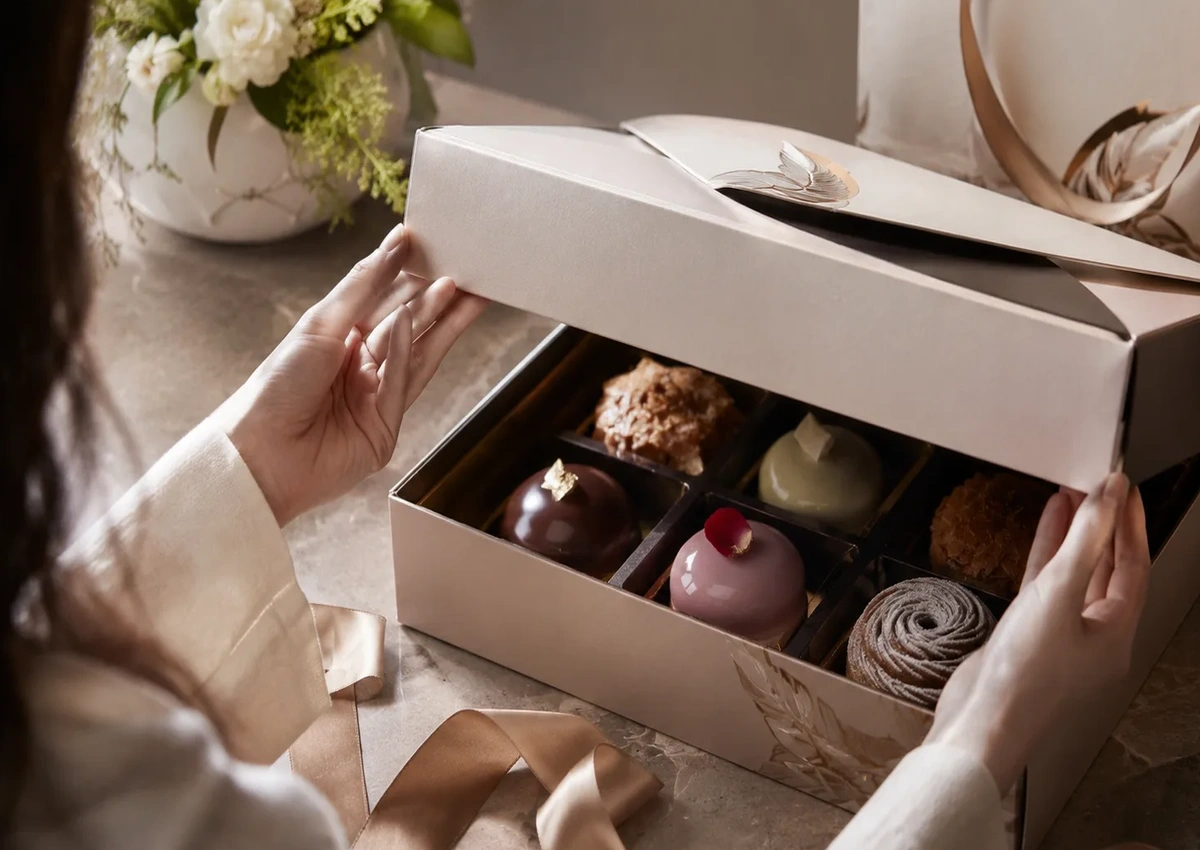
Open a box of beautifully decorated pastries and the packaging is often the first thing you interact with. You lift the lid, move the paper, see how the desserts are arranged, and decide, almost immediately, whether the product feels special.
That small moment is one reason premium dessert packaging is getting more attention in 2026.
The box is often the first impression
Think about a birthday cake, a box of macarons, or a collection of handmade pastries bought as a gift.
Customers are not just buying something sweet. They are buying something for a birthday, a dinner invitation, an office celebration, or simply because they want to treat themselves.
A plain box can still protect the food, but a well-designed package can make the purchase feel more complete.
That matters because people form an opinion before they take the first bite. If the package feels flimsy, difficult to open, or poorly matched to the price, it can bring down the perceived value of the dessert.
On the other hand, a sturdy box with a clean finish and a thoughtful opening experience can make an ordinary purchase feel a little more memorable.
Unboxing is becoming part of food culture
There was a time when “unboxing” mostly belonged to electronics, fashion, and beauty products.
Food has joined the conversation.
Desserts are naturally visual, which makes them particularly suitable for packaging that creates a moment around opening the product. A carefully arranged box can encourage customers to take a photo before eating. A gift-style package can make a small pastry collection feel more like an occasion.
Of course, nobody buys a cake just for the box. But the box can influence how the cake is perceived and remembered.
That is increasingly relevant for dessert businesses that rely on Instagram, TikTok, or word of mouth. Packaging may only appear for a few seconds in a photo, but those few seconds can help people recognise a brand.
Premium does not have to mean complicated
When people hear “luxury packaging,” they may picture rigid boxes, ribbons, magnetic closures, and expensive finishes.
Those options certainly have their place, especially for gift collections and seasonal products. But premium packaging does not always need to be elaborate.
Sometimes the difference is much simpler.
A heavier paperboard, a better-fitting lid, cleaner printing, or a neat interior insert can make a package feel significantly better. Even the way a box opens can change the experience.
For most dessert brands, the goal is not to make the packaging more complicated. It is to make it feel intentional.
That is an important distinction. Customers can usually tell when something has been designed carefully and when decorative details have simply been added for show.
Good packaging still has to survive real life
There is one easy mistake in the pursuit of beautiful presentation: forgetting what happens between the bakery and the customer.
A delicate dessert may need to travel across town in a delivery van. A box may be carried up a flight of stairs or placed on the back seat of a car. A cake cannot arrive leaning to one side just because the packaging looked impressive in a product photo.
Structure matters.
The package needs to protect toppings, keep products from moving around too much, and stay stable during transport. It also needs to be easy for staff to pack. A beautiful box that takes twice as long to assemble can become an operational headache during a busy weekend.
The best premium dessert packaging usually sits somewhere in the middle: attractive enough to feel special, practical enough to use every day.
Gifting is changing the packaging equation
Gifting is one of the strongest reasons dessert brands are moving toward more polished packaging.
A customer buying six pastries for the office has different expectations from someone ordering a dessert box for a wedding anniversary.
The more emotional the purchase, the more packaging can influence the decision.
This is where gift-focused formats such as rigid or magnetic boxes can make sense. The opening becomes slower and more deliberate, which can suit higher-priced assortments and special occasions.
Not every product needs that treatment. A daily croissant probably does not need a luxury gift box. A limited-edition dessert collection might.
The packaging should match the reason people are buying the product.
Brands are also thinking about consistency
Another reason premium packaging is gaining attention is brand recognition.
A dessert business may sell cakes, cookies, pastries, and seasonal gift sets. Using completely different packaging for each product can make the brand look fragmented.
A consistent packaging family solves part of that problem.
The box does not need to look identical across every product, but the colours, logo treatment, typography, and overall feel should be recognisable. Customers should be able to see a package on a table and know where it came from.
That consistency becomes even more useful when a bakery adds another location or starts selling through different channels.
- Related Post: How Vacuum Sealing Has Moved From a Restaurant Kitchen Technique to a Standard Home Food Preservation Tool
The trend is really about perceived value
The biggest change is probably not the box itself.
It is the way customers think about the full product.
A premium dessert is no longer judged only by taste and appearance. Increasingly, people consider the presentation, the occasion, the convenience, and the overall experience.
That does not mean every dessert brand needs expensive packaging.
It means packaging deserves to be considered as part of the product rather than something added at the end.
For brands selling everyday treats, simple and reliable packaging may be exactly right. For businesses focused on gifting, celebration cakes, or premium collections, investing more in the unboxing experience can make much more sense.
The dessert still needs to be delicious.
But in 2026, the box it comes in is becoming part of the story too.