
The global healthcare landscape is undergoing a monumental shift, moving away from traditional intuition-based practices toward a framework rooted deeply in empirical data. For undergraduate students entering this field, the transition from classroom theory to clinical reality is often bridged by a single, critical competency: evidence-based research skills. These skills are no longer just academic requirements for passing a semester; they are the architectural blueprint for the next generation of healthcare leaders who must navigate complex patient needs and rapidly evolving medical technologies.
Developing these competencies requires a disciplined approach to information synthesis. Many students find that engaging with a healthcare assignment help curriculum allows them to master the nuances of clinical inquiry while maintaining high academic standards. By utilizing Myassignment resources, future practitioners can bridge the gap between heavy theoretical workloads and the practical application of research findings, ensuring that their clinical decisions are always backed by the latest validated data. This synthesis of support and self-study is what ultimately creates a professional capable of leading a modern ward or research facility.
The Pillars of Evidence-Based Practice (EBP)
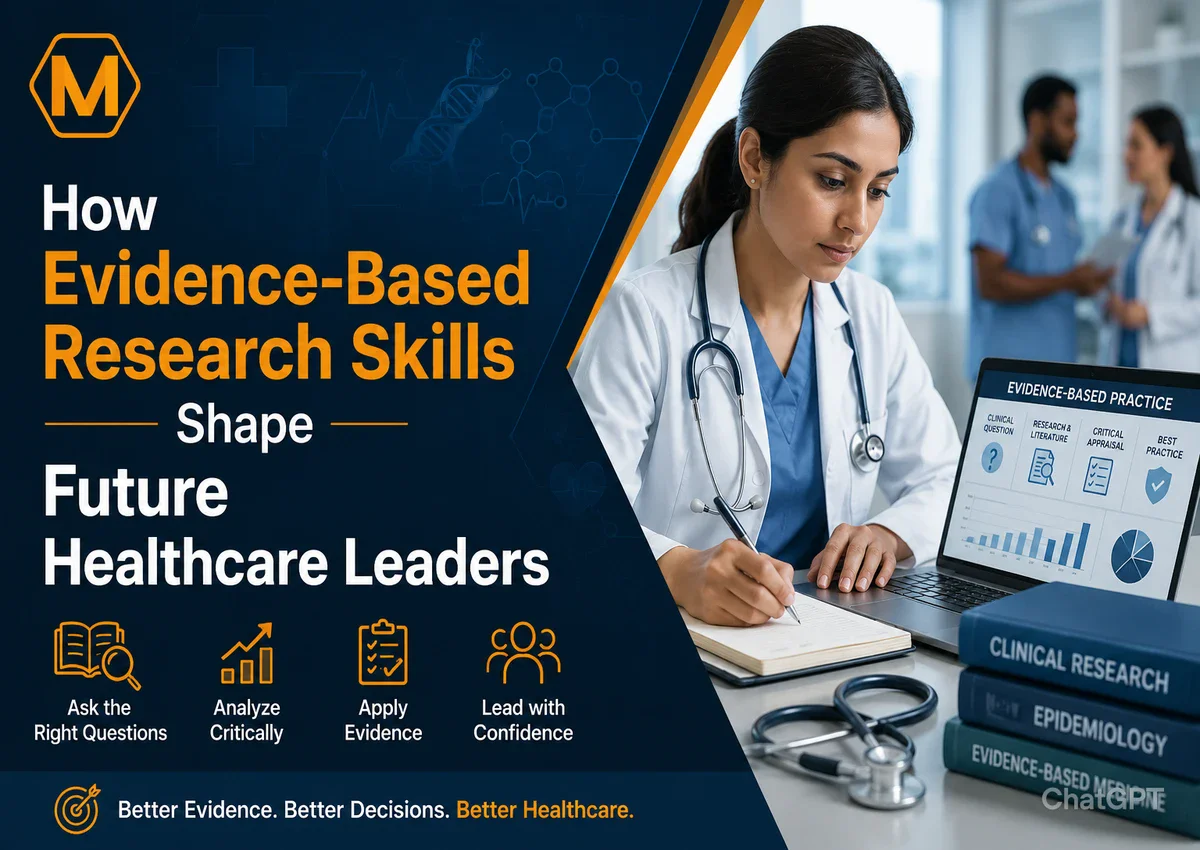
The general definition of Evidence-Based Practice is the combination of clinical skills, patient preferences, and the highest quality research evidence. It is a student’s responsibility to develop the skills to ask the right clinical questions. The PICO model (Population, Intervention, Comparison, Outcome) is frequently the first step in this process and helps to teach students to focus on what they find and make it relevant to the patient they will see.
“Leadership in healthcare isn’t about knowing all the answers; it’s about knowing how to find the most accurate ones.”
Beyond the initial question, leadership involves the critical appraisal of existing literature. Not all published research is created equal. Understanding the hierarchy of evidence from systematic reviews and meta-analyses at the top to expert opinions at the bottom is essential. Students who can distinguish between a flawed study and a rigorous clinical trial are the ones who will eventually influence policy and improve patient outcomes at a systemic level.
Bridging the Gap: From Nursing School to Clinical Leadership
The importance of research literacy is particularly critical in the nursing profession. Nurses, who are among the first to interact with patients and serve as the first line of defense for patient safety. As students move on to higher levels of care, they are equipped to evaluate and analyze EHRs and diagnostics with critical thinking. A task-oriented nurse is not a nurse leader, because nurse leaders are able to see trends and anticipate risks.
Leadership in this instance is about challenging the status quo. When a future healthcare leader recognizes that a particular bedside technique is not meeting expectations from the latest literature, he or she can use research skills to assert that change is needed. It is this advocacy that makes healthcare environments dynamic and patient-centric, ensuring that patient care is not hindered by stagnation.
Academic Rigor and Global Healthcare Standards
Global healthcare standards now demand a level of technical literacy that was optional a decade ago. Undergraduate students across the UK, USA, Australia, and the UAE are now evaluated on their ability to produce high-level reports that meet international standards of “Information Gain.” This means that when writing an essay or a clinical report, the student must provide unique insights rather than merely repeating what has already been said in textbooks.
| Skill Category | Academic Application | Leadership Impact |
| Data Synthesis | Synthesizing multiple journals for a literature review. | Creating comprehensive patient care plans from diverse data points. |
| Critical Appraisal | Identifying flaws in a research methodology. | Evaluating the cost-effectiveness and safety of new hospital equipment. |
| Technical Writing | Writing clear, evidence-backed healthcare assignments. | Developing hospital-wide safety protocols and policy documents. |
| Ethical Reasoning | Addressing ethics in research papers. | Navigating complex bioethical dilemmas in clinical settings. |
The Economic and Social Impact of Research Literacy
Healthcare leadership also involves fiscal responsibility. Research-literate leaders understand the economic impact of medical decisions. As a result, evidence-based protocols are implemented to improve efficiency. Hospital systems can reduce patient stay lengths and lower readmission rates. In addition, expensive resources can be used more effectively. This data-driven approach supports the sustainability of global healthcare systems. Especially in hospitals facing staffing shortages, these strategies become extremely important.
Similarly, these skills help healthcare professionals address health disparities more effectively. By analyzing epidemiological data, leaders can identify patterns and community health risks. Furthermore, social determinants of health can be understood more clearly. As a result, targeted interventions can be designed for vulnerable populations. Research literacy also helps prove that community health programs are effective. Therefore, funding and political support become easier to secure. In the long run, these programs can continue serving communities successfully.
- Health Related Post: How Effective Is Methocarbamol for Back Pain and Nerve Relief?
Conclusion
The journey of an undergraduate student to become a healthcare leader involves academic struggles to learn to process and apply information. The most important thing that a student can learn is how to do evidence-based research. It empowers a learner to become a participatory player in the global healthcare discourse. Keep in mind, as you strive for excellence, innovation, and most importantly, improved patient care as you continue your studies, that each report, each assignment, and each research endeavor is a stepping stone.
Frequently Asked Questions
Q.1. Why are research skills important for students who want to be clinicians, not researchers?
Even if you don’t plan to conduct your own studies, you must be able to read and interpret the research of others to ensure your clinical practices are safe, effective, and up-to-date.
Q.2. How does “Information Gain” help in healthcare ranking and authority?
In digital and professional spaces, providing unique, data-backed insights (Information Gain) proves to search engines and professional bodies that you have a deep, authoritative, and practical understanding of your subject.
Q.3. What is the PICO model in nursing research?
PICO stands for Population, Intervention, Comparison, and Outcome. It is a structured framework used to develop a clear, precise clinical question, which serves as the foundation for evidence-based practice.